NVIDIA faces SEC investigation and delays its 10-Q filing
The reported investigation
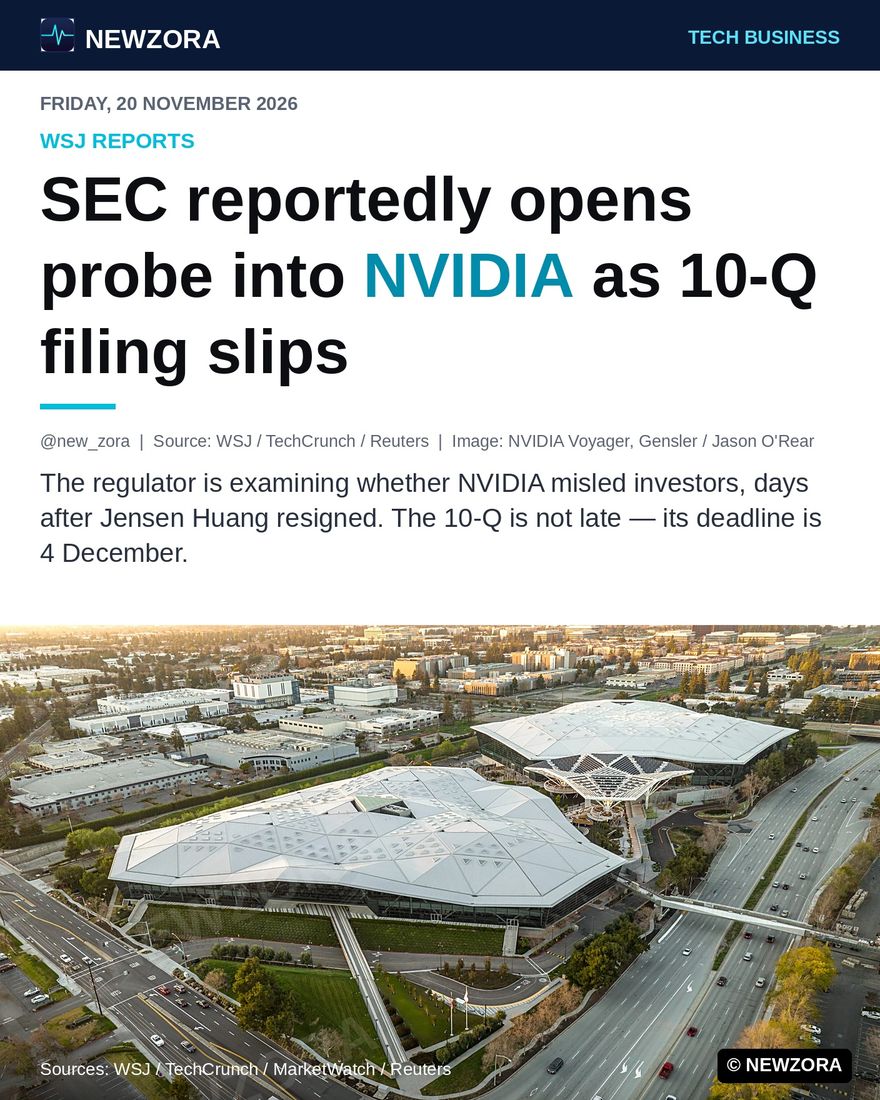
According to The Wall Street Journal, the Securities and Exchange Commission opened a civil investigation into NVIDIA that includes an examination of whether its disclosures misled investors. The report, published on 17 November 2026, did not state that the regulator has brought charges or reached any finding. A civil investigation is a preliminary stage: it allows the regulator to gather information and does not, by itself, establish that the company violated any law.
The timing of the report is material. It emerged shortly before NVIDIA's earnings release on the same day, a moment when investor attention on the company is at its highest. NVIDIA reported third-quarter revenue of 115.8 billion dollars, an increase of 103 percent year on year. That figure provides context for the scale of the business under examination, but the investigation concerns the company's disclosures, not its reported revenue.
The delayed 10-Q filing
On the earnings call on 17 November 2026, Colette Kress, NVIDIA's interim chief executive officer and chief financial officer, said the company would file its quarterly report on Form 10-Q "in the coming weeks" rather than on the same day as the earnings release, which has been its usual practice. NVIDIA later told Timothy Arcuri, an analyst at UBS, that the delay relates to whether additional disclosure is required concerning the investigation into Jensen Huang, the company's former chief executive.
The filing is not late. The quarter ended on 25 October 2026, and the deadline for a large accelerated filer to submit its 10-Q is 40 days after the quarter's end, which falls on 4 December 2026. A filing that arrives after the earnings release but before that date is within the regulatory timetable. Any description of the filing as overdue would therefore be inaccurate.
What the delay does signal is uncertainty inside the company about what must be disclosed. The 10-Q is the document in which NVIDIA must formally state what it knows, and the additional time suggests the company and its advisers are still determining the scope of that disclosure.
The events leading to the investigation
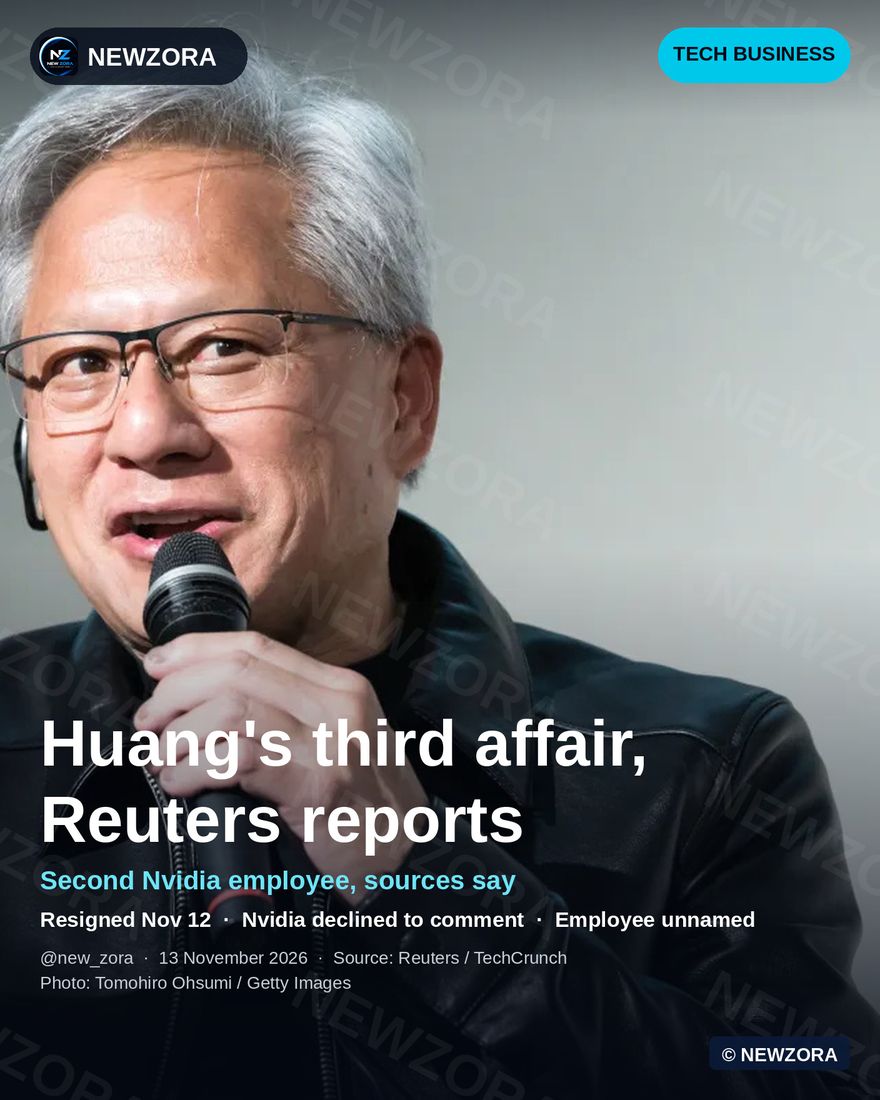
The reported investigation follows a sequence of events that began in early November 2026. On 8 November, NVIDIA's board opened an independent investigation. On 12 November, Jensen Huang resigned as chief executive officer. Huang has since agreed to a transcribed interview with three committees of the United States House of Representatives on 1 December 2026, and Tim Teter, NVIDIA's general counsel, is scheduled to be interviewed on 2 December 2026.
These events are connected to separate inquiries into alleged diversions of NVIDIA chips to China, which are also being examined by the Department of Justice and by Congress. The Securities and Exchange Commission investigation is distinct from those inquiries in its focus: it concerns what NVIDIA told investors, rather than the movement of hardware.
Since Huang's departure, NVIDIA's shares have fallen by more than 10 percent. That decline measures investor reaction to the accumulated uncertainty, not a judgement on the merits of any investigation.
Why the disclosure question matters
The question at the centre of the reported investigation is narrow but consequential. Public companies are required to disclose material information that a reasonable investor would consider important. If NVIDIA possessed information about the investigations into its former chief executive, or about the alleged chip diversions, that it did not disclose when it should have, the regulator may conclude that investors were misled. The investigation will test whether the company's disclosures were complete and timely.
The outcome cannot be predicted from the information available. The regulator has not announced the investigation, the company has not confirmed it, and the scope of the inquiry as reported is broad. What is known is that the 10-Q, when filed, will be the first formal statement in which NVIDIA sets out its position in a document subject to securities law.
What happens next
Three dates frame the near-term course of events. The first is 1 December 2026, when Huang is scheduled to give his transcribed interview to the House committees, followed by Teter on 2 December. The second is 4 December 2026, the deadline for the 10-Q filing. The third is the filing itself, whenever it arrives within the permitted window, which will show whether NVIDIA has disclosed additional information about the investigation.
Until those events occur, the public record consists of the Journal's report, the statements made on the earnings call, and the sequence of board and executive actions in November. Investors, analysts and regulators will be reading the 10-Q closely when it appears, because it is the document in which the company must formally say what it knows.