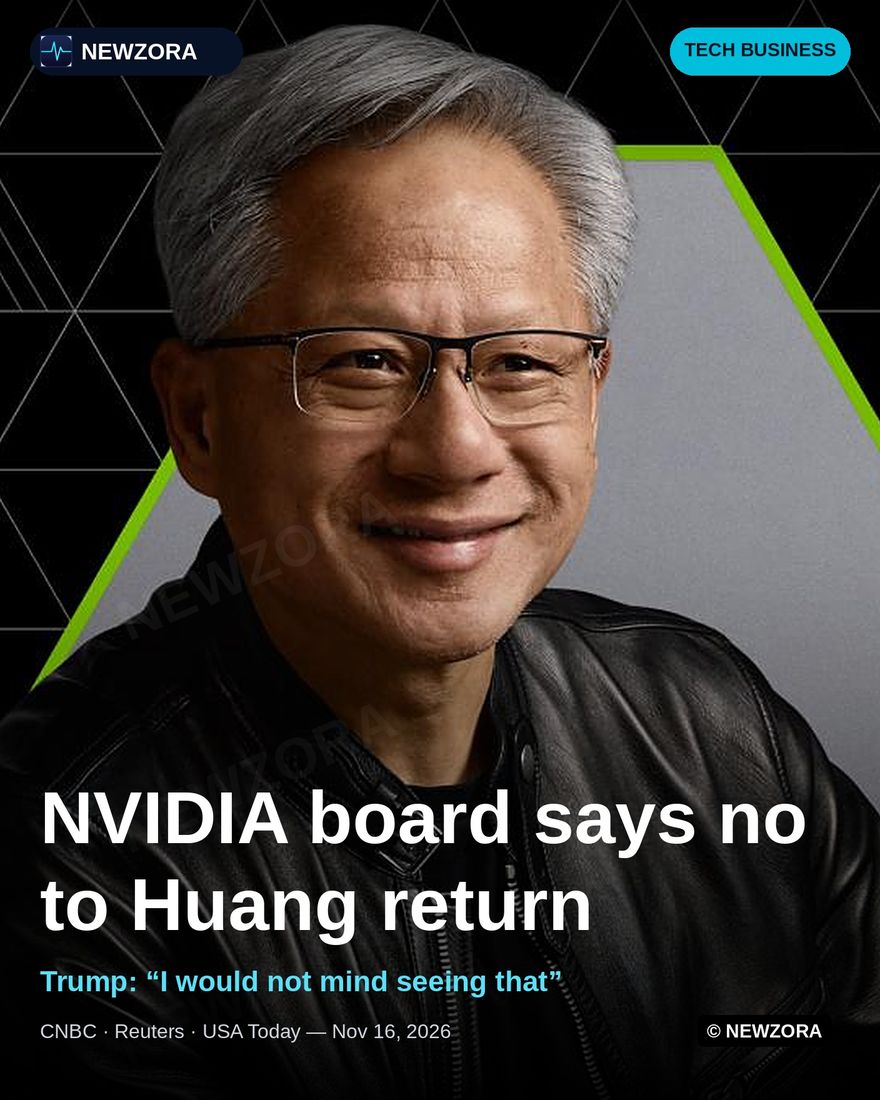
Nvidia board not considering Jensen Huang's return as CEO
The report arrived a day after the Financial Times reported that Huang had discussed a possible return with close confidants. The two reports describe different sides of the same episode. One records the position of the board. The other records the activity of Huang and his supporters. Neither report indicates that the board has altered its course.
Alice Huang, a former executive at Singapore-based Megaspeed, is alleged to have had contact with Chinese intelligence, according to reports; the FBI has investigated for about a year and has not reached a conclusion, and no finding has been made. Nvidia's board investigation, led by Wachtell Lipton, is ongoing.
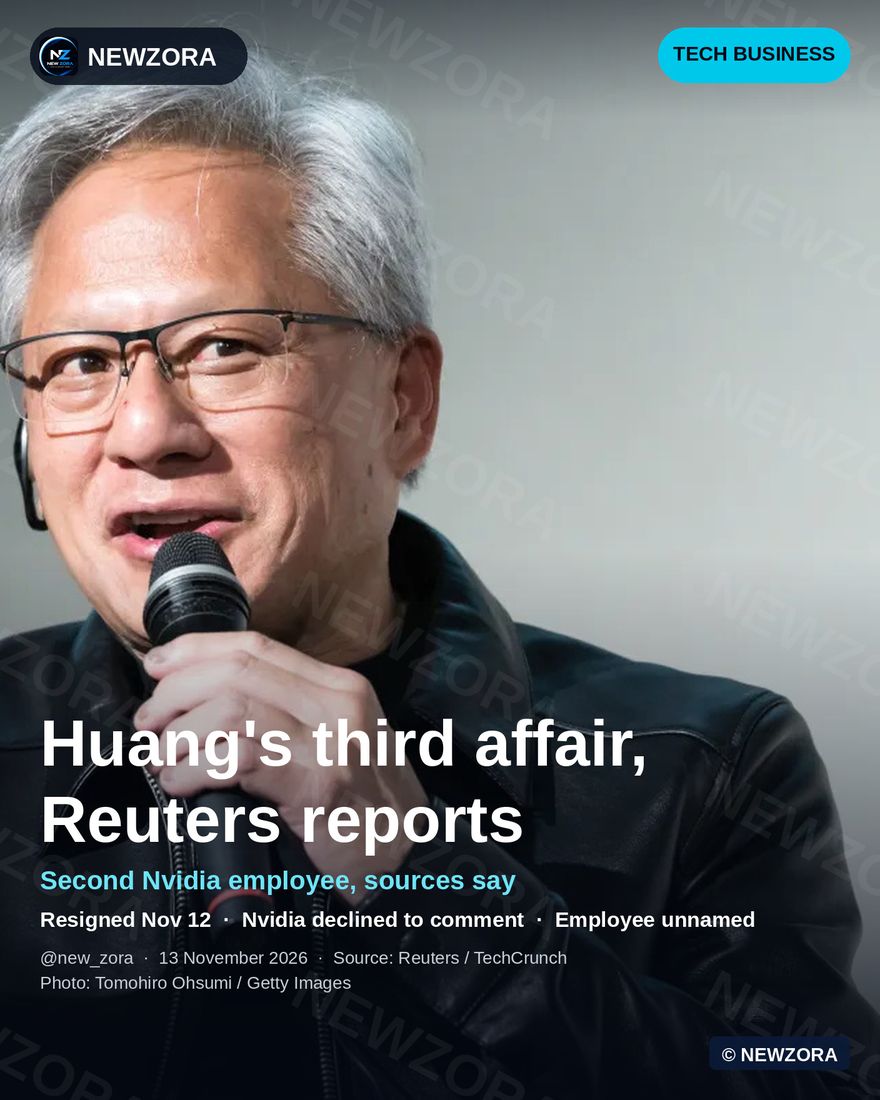
Huang resigned on November 12 after 33 years as chief executive of Nvidia. Colette Kress, the company's chief financial officer, serves as interim chief executive. Nvidia reports quarterly earnings on Tuesday, November 17, an event that will place the company's leadership transition under renewed scrutiny from investors and analysts.
The board's position
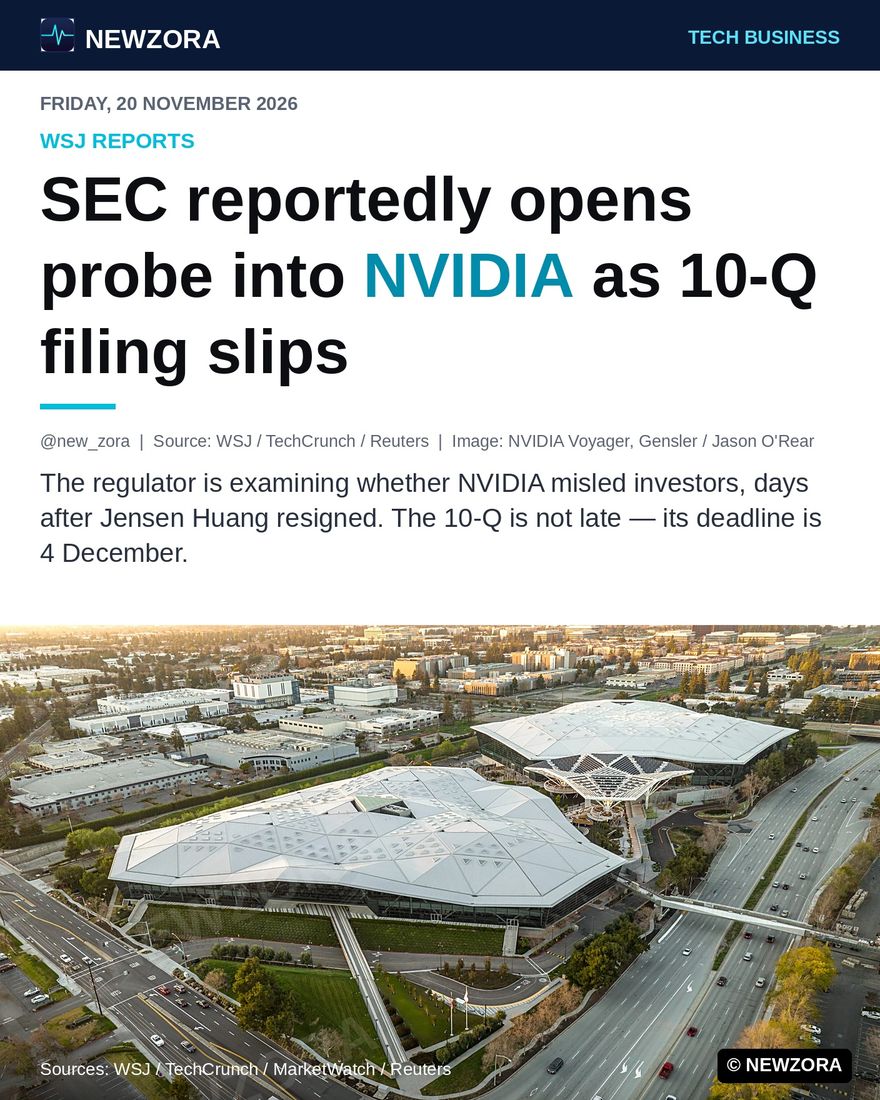
The board's position, as reported by CNBC on November 16, is unambiguous in its reported terms. The board is not considering bringing Huang back as chief executive. Its attention is directed toward the investigation led by Wachtell Lipton, the law firm engaged by the board, and toward the selection of a search firm for a permanent chief executive.
The board had previously issued a statement on November 13, reported by Benzinga, in which it addressed the circumstances of Huang's departure. The CNBC report indicates that the board has not revised that position in the days since. The process described by the report is procedural rather than personal: an investigation remains open, and a search for a permanent successor is under way through a firm that has yet to be selected.
The distinction between selecting a search firm and hiring a chief executive is significant. A search firm identifies and assesses candidates. It does not appoint them. The report stated that no candidates have been formally engaged, which means that the succession process remains at an early stage. Investors should therefore treat any discussion of a named successor as speculation until the board or the company confirms otherwise.
The board's focus on the investigation is also significant. An investigation led by an external law firm, with no published conclusion, leaves the factual record incomplete. The board has not disclosed the scope of the investigation or a timetable for its completion. Until it does, the precise basis for any future decision about leadership remains a matter for the board alone.
Trump's remarks
President Trump addressed the matter on November 16 as he departed the White House. Asked about Alice Huang, he said, "I don't know that she was a spy at all." On the question of a return, he said, "I would not mind that... I think he learned a big lesson... I would certainly not mind seeing that."
The remarks are notable for what they do not establish. The president did not state that a return would occur, nor did he indicate that he had discussed the matter with the board. His comments expressed a personal view, not a corporate decision. The authority to appoint a chief executive rests with Nvidia's board of directors, and the board has reported a contrary position.
Trump also said that the United States "was not put at risk". That statement addresses the national security dimension of the episode. It does not resolve the factual questions that remain before the Federal Bureau of Investigation or the board. According to Attorney General Todd Blanche, the FBI has investigated for about a year and has not reached a conclusion. The absence of a conclusion is itself a material fact, and it should be reported as such rather than filled in by inference.
The sequence of statements matters. The president's remarks followed the Financial Times report of November 15 and preceded or coincided with the CNBC report of November 16. The board's position, as reported by CNBC, was not altered by the president's remarks. The two positions stand side by side: the president would not object to a return, while the board is not considering one.
The comeback campaign
The campaign to restore Huang as chief executive has developed rapidly since his resignation. The Financial Times reported on Sunday, November 15, that Huang had discussed a possible return with close confidants. The same report described a group of Silicon Valley allies who had assembled a "war room" to lobby the board in favour of his reinstatement.
A petition calling for Huang's reinstatement had gathered more than 177,000 signatures, according to Reuters on November 16. The signatories include Elon Musk, Tim Sweeney, Travis Kalanick and Steve Chen. The affiliations of the signatories are self-reported and have not been verified. The petition therefore demonstrates the scale of public support among its signatories, but it does not constitute evidence about the merits of the underlying allegations or about the board's deliberations.
The speed and scale of the campaign are unusual for a corporate succession dispute. Petitions of this kind rarely determine board decisions, which are governed by fiduciary duties and by the findings of formal investigations. The campaign may nevertheless influence the public discussion around the company, and it has already drawn a response from the president. Its practical effect on the board's process remains to be seen.
It is also important to distinguish between the campaign and the investigation. The campaign argues for Huang's return. The investigation examines the circumstances of his departure. The board's stated focus is on the investigation and on the search for a permanent successor. The campaign has not, according to the available reporting, changed that focus.
What happens next
Three developments will determine the next stage of the episode. The first is the board's investigation. Wachtell Lipton's work is ongoing, and the board has not indicated when it will conclude or whether its findings will be made public. The investigation is the formal process through which the board will establish the facts relevant to its decisions.
The second is the selection of a search firm and the subsequent search for a permanent chief executive. The board is in the process of selecting a firm, and no candidates have been formally engaged. The appointment of a permanent chief executive will require a formal decision by the board, and the company will be expected to disclose it through its usual channels.
The third is Nvidia's quarterly earnings report on Tuesday, November 17. The report will provide the first formal financial disclosure since Huang's resignation, and it will be the first occasion on which the interim chief executive, Colette Kress, addresses investors in that capacity. Analysts are likely to seek clarity on the leadership transition, the investigation and the search for a permanent chief executive. The company may choose to provide further information, or it may decline to comment while the investigation remains open.
Until the investigation concludes and the board acts, the public record consists of the following: the board is not considering Huang's return, according to CNBC; the president would not object to a return, according to his own remarks; a petition with more than 177,000 signatures supports a return, according to Reuters; and the FBI has investigated for about a year without reaching a conclusion, according to the attorney general. Each of these facts should be weighed on its own terms, and none should be treated as a substitute for the findings of the board's investigation.