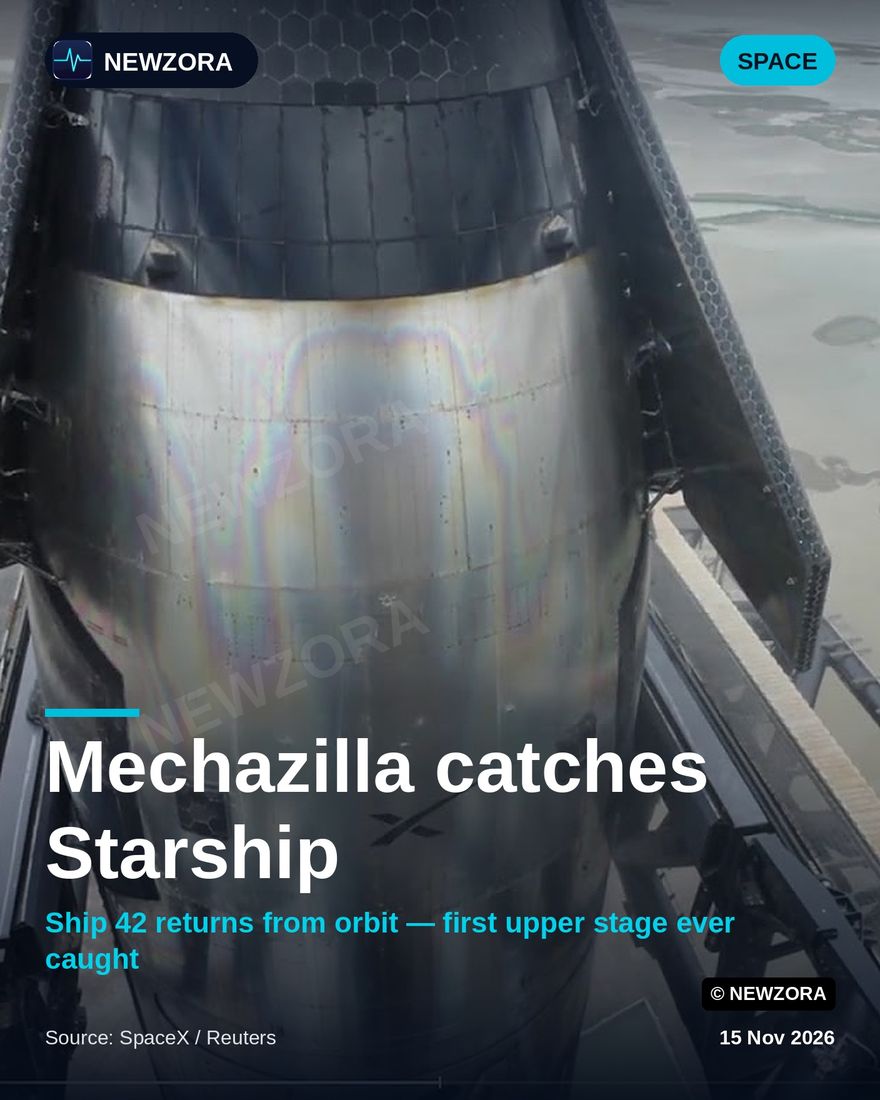
SpaceX Starship Flight 15 lifts off — booster catch waved off
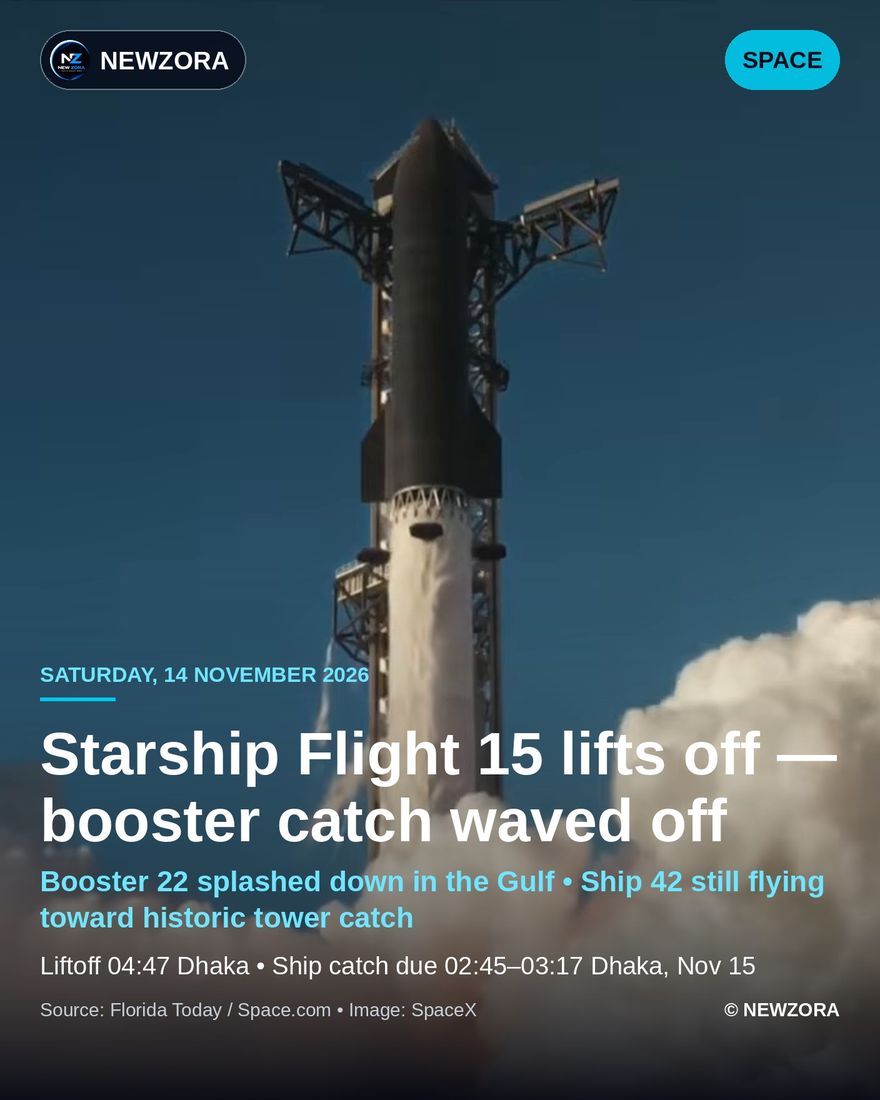
The launch
Flight 15 is the first flight of the Version 3, or V3, Starship system. Both stages flown on this mission are V3 vehicles: Super Heavy Booster 22 and Ship 42. The V3 configuration is the newest iteration of the Starship design, and this flight is its first operational test. The launch took place from Starbase, SpaceX's launch facility in Texas, and the vehicle cleared the pad without any reported anomaly during ascent.
The flight had been cleared to proceed in advance. A licence issued by the United States Federal Aviation Administration authorised the mission, and the flight plan called for the first attempt to catch both stages of the vehicle: the Super Heavy booster on its return to Starbase, and Ship 42 after a period in orbit. That plan is no longer achievable on this flight, because the booster has already been lost to the sea. The double catch, which would have been a first in the history of the programme, is now impossible.
The booster catch
The Super Heavy booster was due to return to the launch site and be caught by the tower's mechanical arms, known as chopsticks, in the same manner as previous successful booster catches. According to live reporting of the flight, the catch was aborted shortly before the attempt. The booster did not return to the tower and instead splashed down in the Gulf of Mexico.
SpaceX has not disclosed a reason for the decision at the time of writing, and no cause should be inferred from the available reporting. The facts established by the sources for this article are limited to the sequence itself: the catch was waved off, the booster was not caught, and it came down in the Gulf of Mexico. Whether the decision was taken by the flight team or by an automated system, and what condition prompted it, have not been stated publicly.
The loss of Booster 22 is a setback for the recovery programme, but it is a setback of a specific kind. The booster was expended rather than destroyed in flight: it completed its ascent burn, separated from Ship 42, and descended under control to a splashdown in the Gulf.
Ship 42 and the catch ahead
Ship 42 is now coasting in orbit, and the second half of the flight plan remains in effect. The upper stage is due to attempt a tower catch at Starbase in a window running from 02:45 to 03:17 Dhaka time on Sunday 15 November, after approximately 14 orbits and about 22.5 hours in flight. If the attempt succeeds, it will be the first time a Starship upper stage has been recovered by the tower arms, rather than splashing down at sea or being expended.
The window of 32 minutes, from 02:45 to 03:17 Dhaka time, is the period during which that return is possible.
The Starlink payload
Ship 42 is also carrying 26 Starlink V3 satellites, which are due to deploy during the orbital phase of the flight. At the time of writing, the deployment has not been confirmed in the sources consulted for this article. The satellites are therefore described here only as due to deploy, and no claim is made that they have been released. Confirmation of the deployment, or of any problem with it, will depend on later reporting from SpaceX or from the tracking of the satellites in orbit.
The 26 satellites are the V3 generation of the Starlink constellation, the same generation as the vehicle carrying them. Their deployment, if it proceeds as planned, would demonstrate the use of Starship as a deployment vehicle for the newest Starlink hardware.
Background
Starship is the largest launch vehicle ever flown, and the only one designed for the full recovery and reuse of both of its stages. The Super Heavy booster provides the thrust for the first part of the flight, then separates and returns to the launch site, where the tower arms catch it in mid-air. The Ship upper stage continues to orbit, and on recent flights has either splashed down in a controlled manner or, as planned on this flight, returned for a tower catch of its own.
The V3 generation flown on Flight 15 is the successor to the V2 vehicles used on earlier flights in 2026. The booster catch was first achieved on an earlier flight, and the ship catch is the next recovery milestone still to be demonstrated.
Why it matters
The outcome of Flight 15 matters for three reasons. First, it is the first flight of the V3 vehicle, and the performance of the new generation in ascent and in orbit will determine the pace at which the programme moves to regular V3 operations. A clean liftoff and a ship that reaches orbit and remains on course are the minimum conditions for that transition, and both have been met at the time of writing.
Second, the waved-off booster catch is a reminder that recovery is the hardest part of the Starship programme to make routine. The catch requires the booster to return to a precise point in space at a precise time, and the decision to wave it off shows that the system can choose not to attempt a catch when the conditions are not right. The cost of that caution is the loss of a booster; the benefit is the preservation of the tower and the launch site for the ship catch still to come.
Third, the ship catch attempt on Sunday is the most consequential part of this flight. If Ship 42 is caught, SpaceX will have demonstrated the full recovery of both stages of the largest launch vehicle ever built.
What happens next
The next event in the flight is the scheduled tower-catch attempt for Ship 42, in the window from 02:45 to 03:17 Dhaka time on Sunday 15 November. The outcome of that attempt, and confirmation of whether the 26 Starlink V3 satellites deployed as planned, will be the subject of further reporting. The reason for the booster catch abort may also be disclosed by SpaceX in later statements.
Source: Florida Today live updates; Space.com. The photograph accompanying this article is a frame from SpaceX's official Flight 15 webcast, as published in Space.com's video of the launch, showing the Starship full stack at liftoff from Starbase at T-00:00:00. It is a frame of the actual Flight 15 liftoff, not a file photograph of an earlier flight.
More in Space
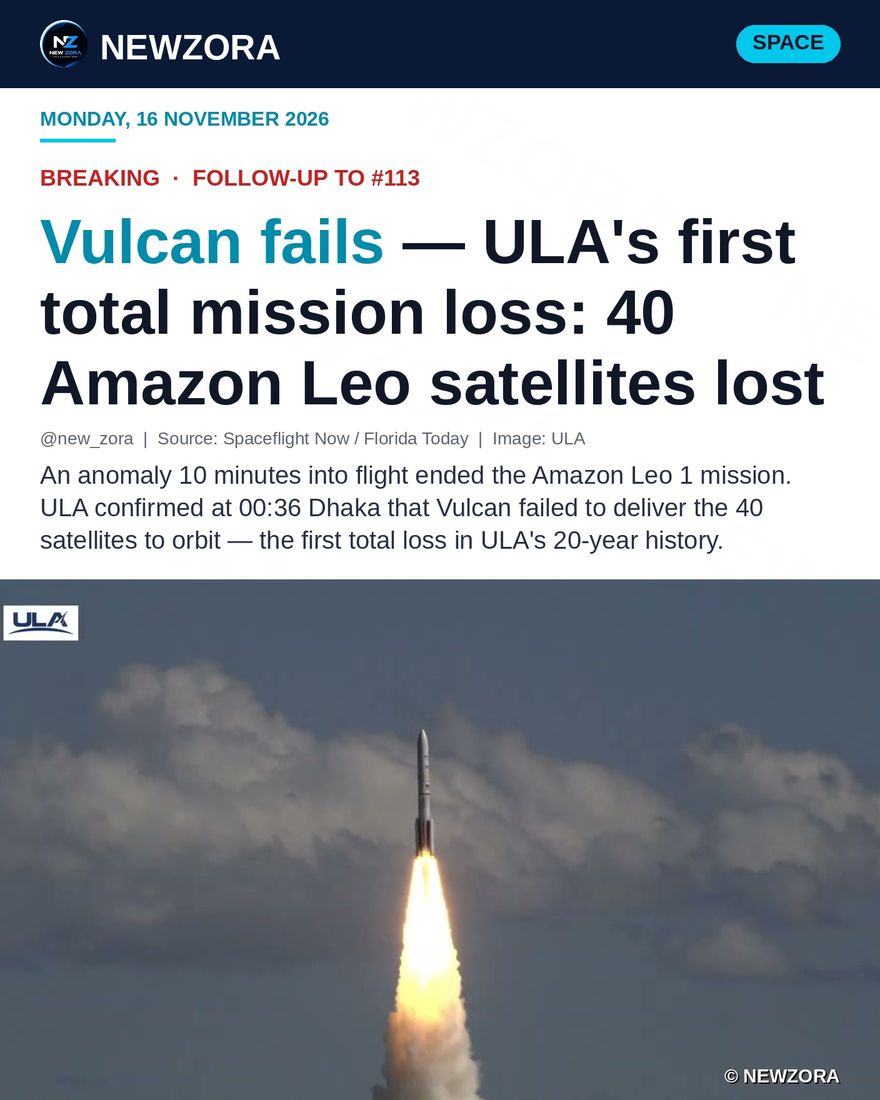
Vulcan fails — ULA's first total mission loss: 40 Amazon Leo satellites lost
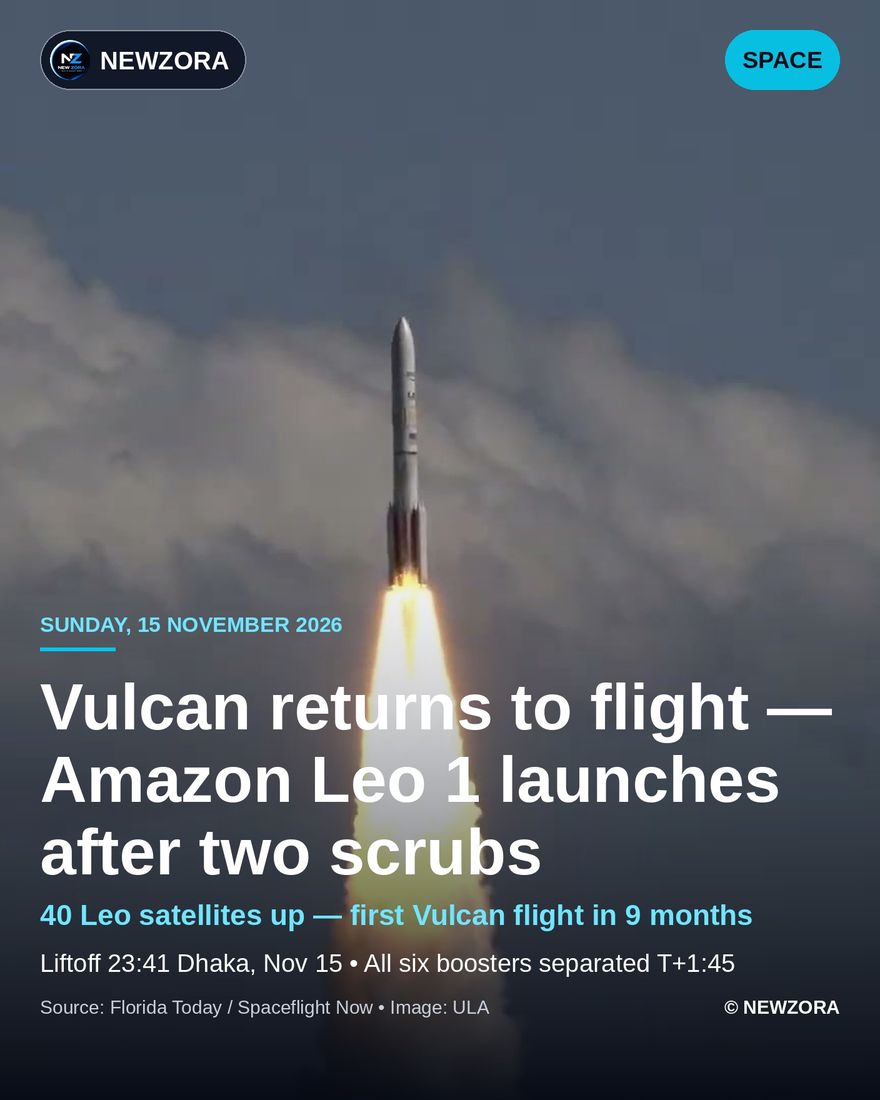
Vulcan returns to flight — Amazon Leo 1 launches after two scrubs