ULA scrubs Vulcan's Amazon Leo launch a second straight day; return-to-flight now Sunday
The scrub and its cause
ULA attributed the delay to a network communication issue between ground equipment and the launch vehicle. Florida Today reported the explanation in its live blog, and FOX 35 Orlando reported the same account, with both outlets quoting ULA. The company did not disclose further technical detail about the nature of the network issue, and no additional cause has been confirmed. The 29-minute window left no margin for the reconfiguration work the issue required, and the attempt was called off before liftoff.
The scrub was the second in two days for a mission that carries particular weight for ULA. The Vulcan rocket has not flown since 12 February 2026, when a booster nozzle burn-through anomaly occurred during the USSF-87 mission. Saturday's attempt was intended to return the vehicle to flight, and it was to carry the first of 38 Vulcan launches that Amazon has booked for its Leo broadband constellation.
Friday's scrub
The previous day's attempt was halted for a different reason. Friday's scrub was caused by a power interruption at the Air Liquide gaseous nitrogen plant, affecting high-pressure pumps at the launch site. The two scrubs therefore stem from separate ground-system problems rather than a single recurring fault: a power interruption on Friday and a network communication issue on Saturday. Neither scrub was attributed to the rocket itself.
The new Sunday target
ULA has rescheduled the launch for Sunday, 15 November 2026, at 12:11 p.m. Eastern Standard Time, equivalent to 11:11 p.m. Bangladesh Standard Time on Sunday, 15 November. The new target remains pending range approval, and the Sunday attempt is therefore not certain until that approval is confirmed and the countdown proceeds. The date and time were reported by Florida Today and FOX 35 Orlando, both citing ULA.
Return to flight after the February grounding
The mission is the first Vulcan flight since the anomaly of 12 February 2026, when a booster nozzle burn-through occurred during the USSF-87 mission. The grounding that followed has kept the vehicle out of service for nine months, and the return to flight has been closely watched within the launch industry. A successful launch would restore Vulcan to operational service and begin the fulfilment of the launch contract that underpins much of the vehicle's manifest.
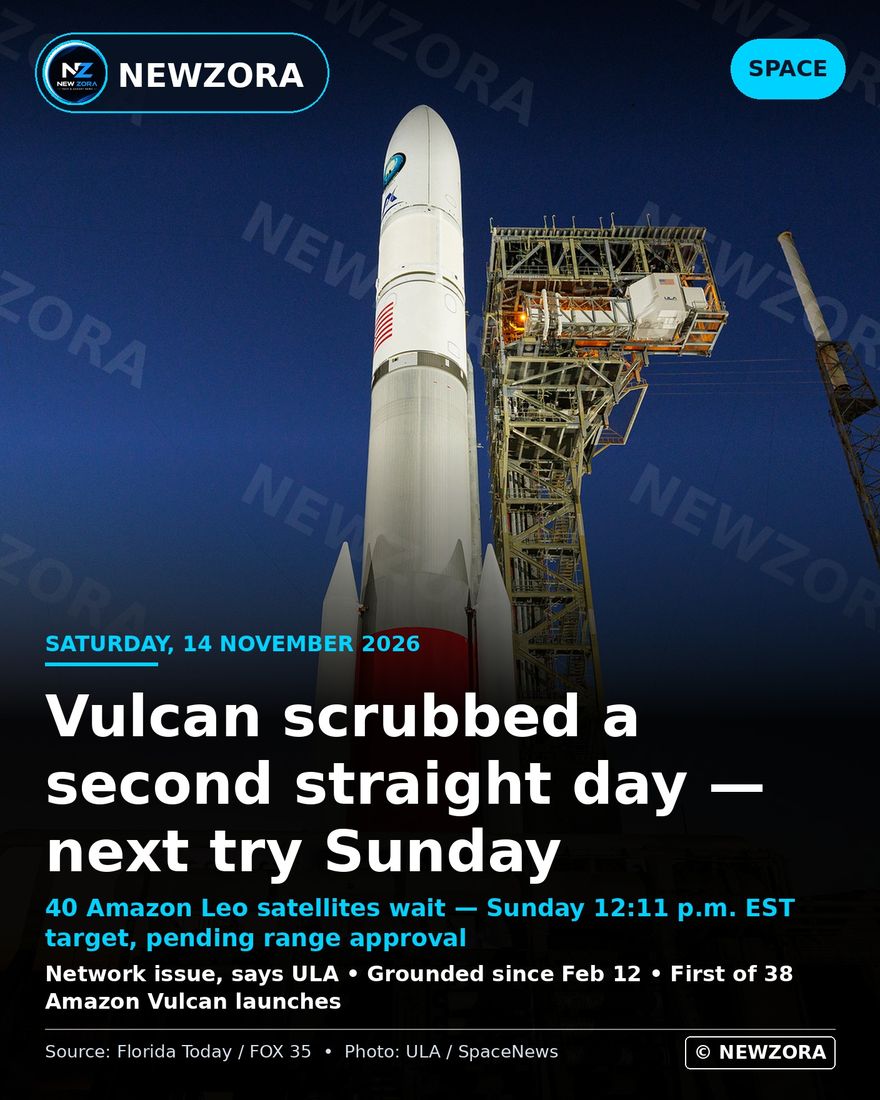
The vehicle prepared for this mission is the USSF-87 vehicle photographed at Space Launch Complex 41. The photograph accompanying this article shows that vehicle at the pad, as published by ULA through SpaceNews.
Why the launch matters
The flight carries 40 Amazon Leo broadband satellites, the first of the 38 Vulcan launches Amazon has booked. The scale of that booking makes the return to flight commercially significant for ULA as well as technically significant: the manifest depends on Vulcan flying regularly, and each delay compresses the schedule for the launches that follow. For Amazon, the mission is the next step in deploying a broadband constellation that is intended to provide internet connectivity, and the pace of deployment depends on the availability of launch vehicles.
The two consecutive scrubs also illustrate the sensitivity of launch operations to ground infrastructure. Both delays originated in ground systems, the gaseous nitrogen plant on Friday and the ground-to-vehicle network on Saturday, rather than in the rocket. Ground equipment is a routine source of scrubs across the launch industry, and the short launch window available on Saturday left no room to absorb the additional time the reconfiguration required.
What happens next
The next step is the Sunday attempt at 12:11 p.m. Eastern Standard Time, subject to range approval. If the countdown proceeds, the launch would mark Vulcan's return to flight and the first of Amazon's 38 booked Vulcan launches. If the Sunday attempt is also delayed, ULA will need to set a further target, and the sequence of ground-system issues will attract closer attention. Further reporting will follow the outcome of the Sunday attempt and any statement ULA issues on the cause of the network communication issue.
Source: Florida Today live blog; FOX 35 Orlando, both quoting United Launch Alliance.
More in Space
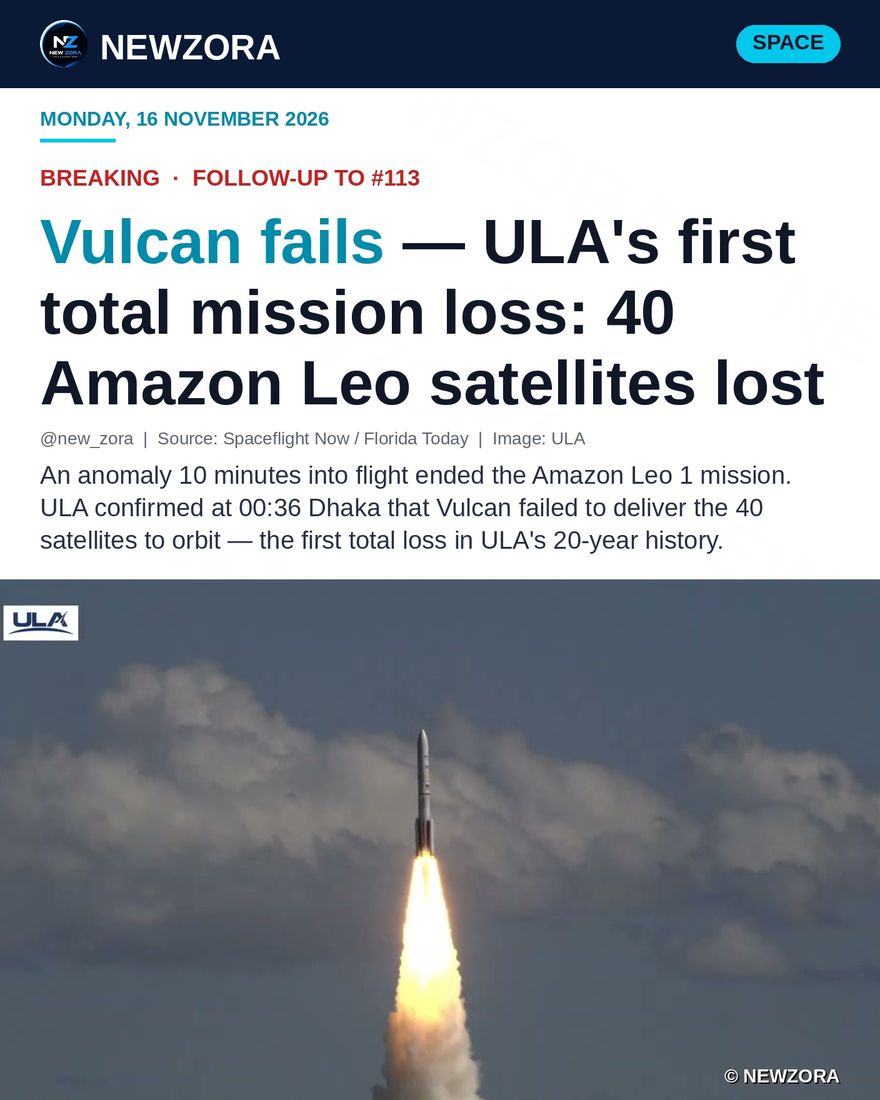
Vulcan fails — ULA's first total mission loss: 40 Amazon Leo satellites lost
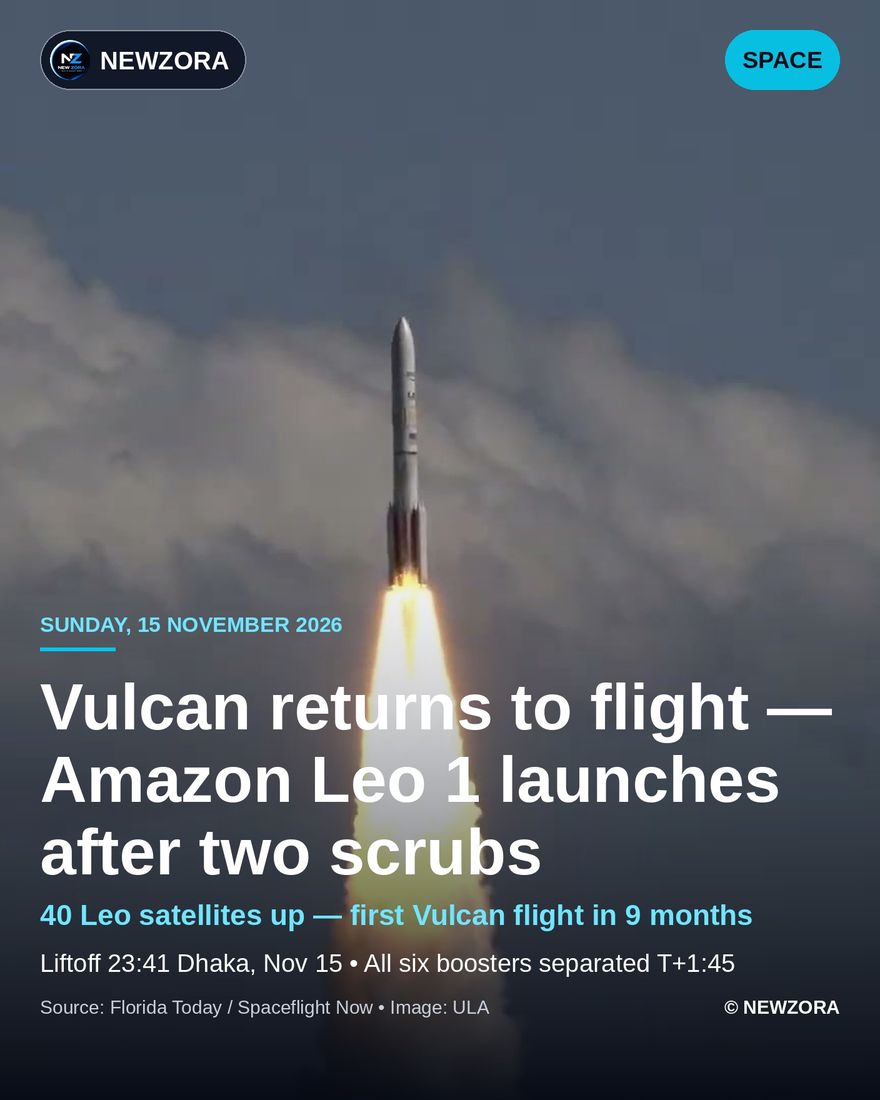
Vulcan returns to flight — Amazon Leo 1 launches after two scrubs