
Apple HomeView is here
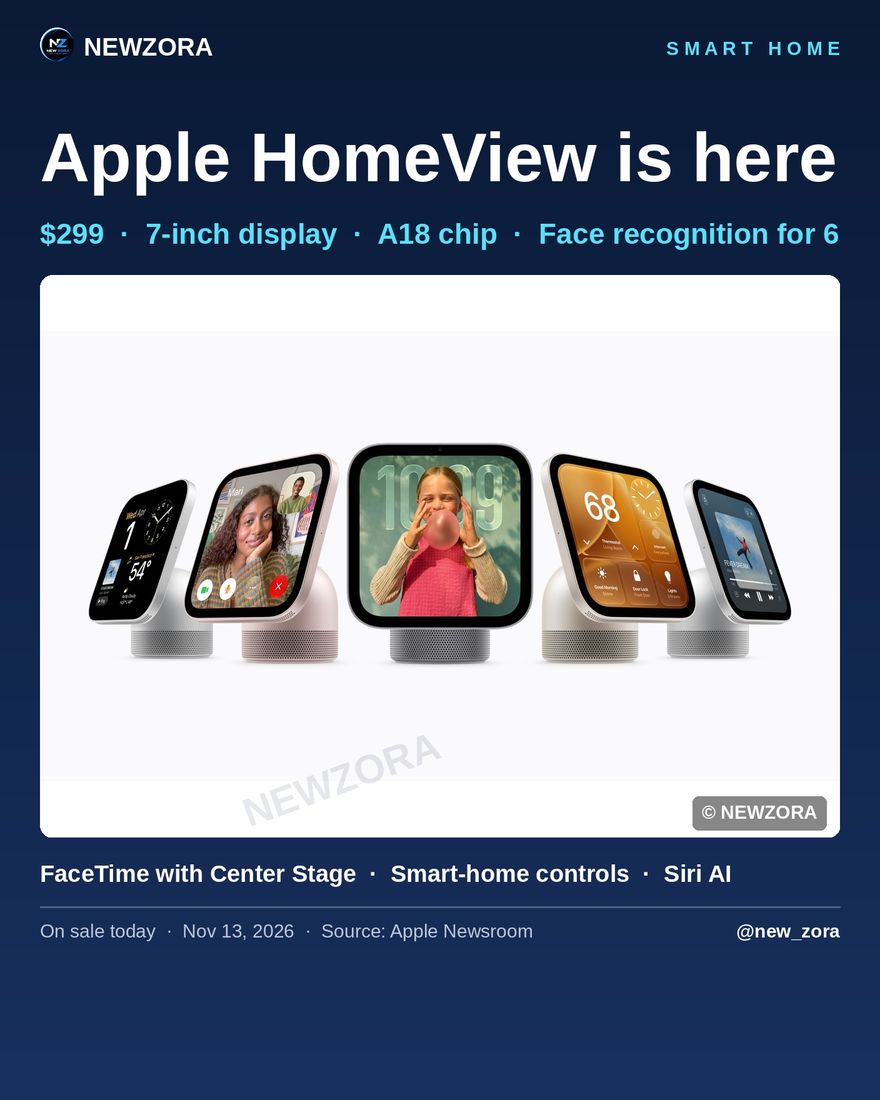
Apple entered the smart display market on Friday 13 November 2026 with the launch of HomeView, its first smart-home hub. The device, announced on 13 October 2026 and available for pre-order from 15 October, combines a 7-inch display, a 12-megapixel camera and the A18 chip in a tabletop unit with a speaker base or a wall-mounted form factor, both priced at $299 in the United States. The launch places Apple in direct competition with established smart displays from Amazon and Google, a category the company had previously addressed only through the iPad and the HomePod.
What happened
Apple confirmed the launch date in its official announcement, "Meet Apple HomeView", published by Apple Newsroom on 13 October 2026. The device went on sale on 13 November 2026 in the United States, Australia, Canada, India, New Zealand, Singapore, South Africa (through Authorized Resellers) and the United Kingdom, priced at $299 in the United States and £299 in the United Kingdom. It is not available in the European Union, where the Siri AI features that underpin the device are unavailable.
HomeView is built around three functions: smart-home control, video calling through FaceTime, and access to Siri AI. The device carries no App Store. According to Apple, only CarPlay-enabled apps are supported, a limitation that places the device closer to a dedicated home hub than to a general-purpose tablet.
The launch coincided with two related releases. A new Apple TV 4K, also priced at $299 and powered by the A19 chip, went on sale on the same day, and pre-orders opened on 13 November for the Apple Home Collection cameras and doorbell, developed with LG.
Specifications and pricing
HomeView uses a 7-inch Liquid Retina display with a resolution of 1088 by 1088 pixels. The A18 chip, the same processor used in recent iPhone models, provides the on-device processing for Siri AI and for face recognition. A 12-megapixel Center Stage camera supports FaceTime calls and keeps the user framed during video calls.
The device recognises up to six household members by face, allowing it to present personalised information to each person. Voice personalisation is handled differently: it operates through each user's paired iPhone or iPad rather than through on-device voice recognition. The distinction matters for shared households, as the review coverage published on 12 November makes clear.
Both versions of the device carry the same $299 price in the United States. The tabletop version, which includes a speaker base, is available in four colours: silver, starlight, rose pink and space gray. The wall-mounted version is available only in space gray and silver. Mounting hardware is sold separately; Apple lists its own mounts at $59.95 to $129.95, and reviewers estimate the additional cost of a wall installation at approximately $100.
First reviews
First reviews were published on 12 November 2026, one day before the launch. The scores were consistent across outlets. The Verge awarded 7 out of 10, Engadget 8.4 out of 10, TechRadar 4 out of 5, ZDNET 4.5 out of 5 and PCMag 4.0 out of 5. Review roundups compiled by MacStories and MacDailyNews show the same pattern: reviewers praised the industrial design, the sound quality of the tabletop speaker base and the quality of the smart-home controls, while raising reservations about the software.
The most serious reservation was identified by The Verge. In a shared household, the review found that one family member could access another member's messages, a gap in the separation of personal data on a device designed to be used by up to six people. Apple has stated that it plans a software update in December to address gaps in the Siri security controls. The update had not been released at the time of publication, and Apple has not disclosed its full contents.
Reviewers also noted the cost of the wall-mounted installation. With mounts priced from $59.95 to $129.95, the total cost of a wall-mounted HomeView rises to approximately $400, a figure that changes the value comparison with the tabletop version, which includes its speaker base in the $299 price.
Background and context
HomeView is Apple's first dedicated smart display, but it is not the company's first product for the home. The HomePod line established Apple in smart speakers, and the iPad has long served as an informal home hub through the Home app. HomeView formalises that role in a dedicated device, one that is always on, always in place and designed for shared use rather than for a single owner.
The launch also reflects the growing importance of on-device intelligence in the home. The A18 chip allows Siri AI functions to run locally, and the face-recognition system is designed to personalise the display for each household member without requiring them to carry a phone. Whether that personalisation is sufficiently separated between users is the question the first reviews raise, and the December software update will be the first test of Apple's response.
Why it matters
The smart display market is mature, with Amazon's Echo Show and Google's Nest Hub established over several years. Apple's entry is therefore judged less on whether the category works than on whether Apple can differentiate within it. The $299 price places HomeView above most competing displays, which makes the design, sound quality and integration with the Apple ecosystem the grounds on which it must justify the premium.
The privacy finding is the more consequential issue. A shared household device that exposes one person's messages to another undermines the premise of personalisation that Apple uses to justify the product. The December update is therefore not a routine patch but a correction to a central feature, and its effectiveness will shape the next round of reviews.
The regional limitation is also significant. The absence of a European Union launch, attributed to the unavailability of Siri AI in the region, means that one of Apple's largest markets will not receive the device in its first wave. Apple has not announced a date for European availability.
What comes next
The immediate questions concern the December software update and its effect on the shared-text issue, the reception of the wall-mounted version once installation costs are factored in, and the performance of the companion products launched alongside HomeView. Pre-orders for the Apple Home Collection cameras and doorbell, developed with LG, opened on the same day as the HomeView launch, and the new Apple TV 4K, priced at $299 with the A19 chip, went on sale simultaneously. Together, the three releases represent the most concentrated smart-home push Apple has made in a single day, and their combined reception will indicate whether the company can establish a durable position in a category it entered late.
Source: Apple Newsroom (official, "Meet Apple HomeView", 13 October 2026); MacRumors (12 November 2026 review); The Apple Post (12 November 2026 first impressions); MacStories and MacDailyNews review roundups.
More in Gadgets
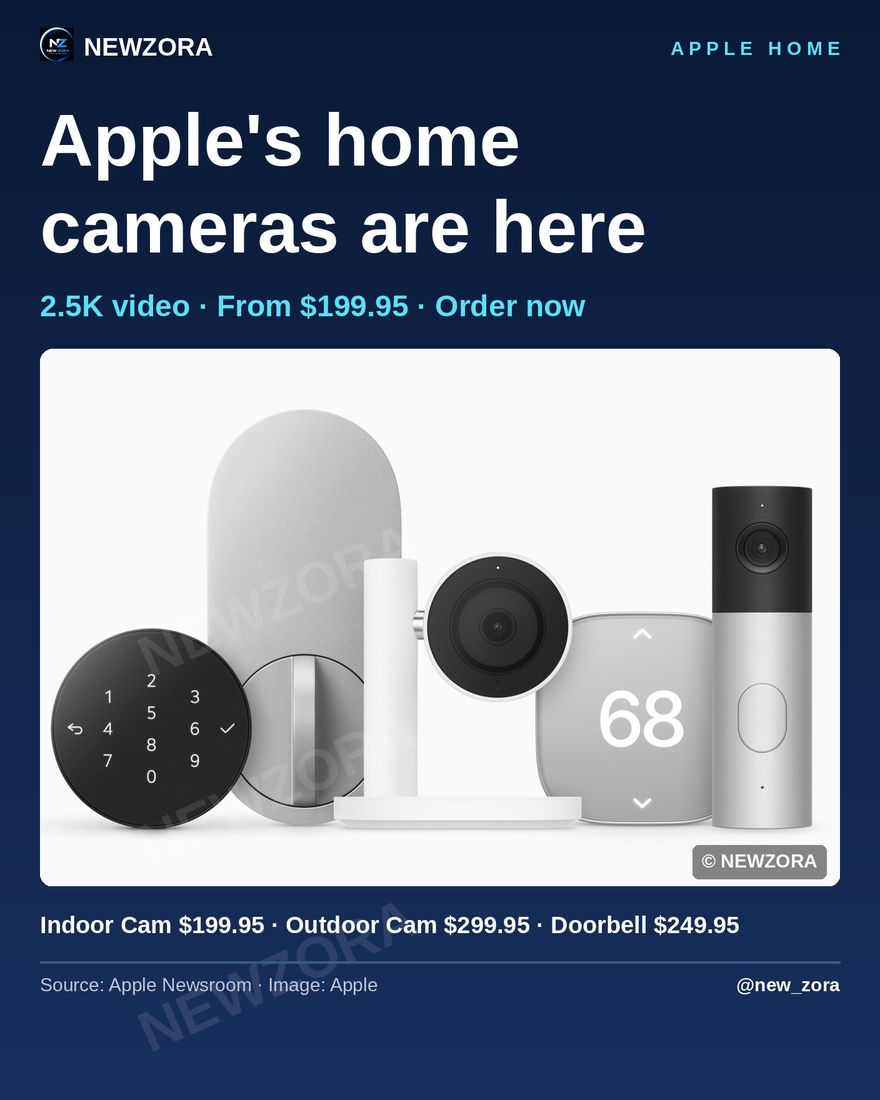
Apple Home Collection cameras and video doorbell now available to order

BYD's luxury brand Denza lands in India — D9 MPV at Rs 90 lakh, Z9 GT at Rs 1.56 crore